Journal · 2026-08-03 · 6 min
Pens, vials, and nasal sprays: what the container documents
The vessel is part of the record. It does not change the peptide into a different molecule, and it does not tell you what to do with it.
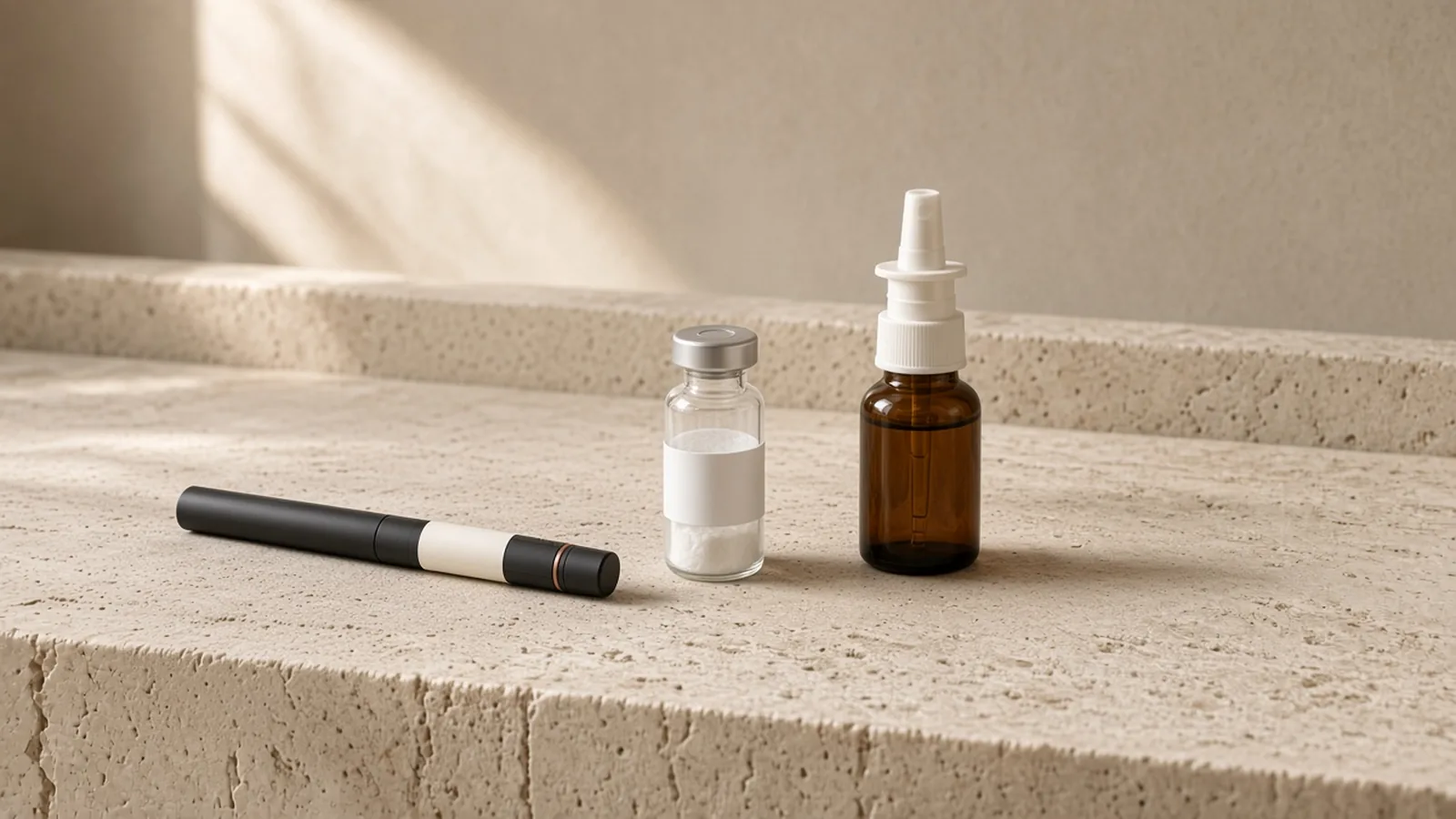
The same name shows up in this catalogue in more than one container. Tirzepatide is a lyophilised vial at 60 mg and a set of prefilled pens at other stated strengths. Semax is a dry vial and a 10 ml spray, both labelled 10 mg. The container is not a footnote. It is what you would actually be holding.
A vial states a mass
A lyophilised vial is a dry solid in a sealed bottle. The useful fields are the sequence, the salt, the stated mass, and the lot. The catalogue does not add a solvent, a concentration, or a volume for those peptide vials, because those would be instructions rather than a description of the solid.
NAD+ is the exception to watch. Neighbouring vials are lyophilised peptides. The NAD+ vial record states 500 mg and does not, on the public catalogue, swear that the contents are a dry cake. Read the lot instead of inheriting the format from the peptide next to it.
A pen states a content, not a schedule
A prefilled pen is a device with a stated content. Where a licensed tirzepatide pen exists, it is a specific product with a specific label. A research pen that uses a familiar milligram number is not that product. We do not translate the number into clicks, units, or days.
A nasal bottle states a fill
The sprays in this catalogue name a peptide mass and a 10 ml fill. That is a concentration only if you divide the two numbers, and even then it is a property of the bottle, not a direction to deliver any part of it. The Selank + Semax bottle is stated as 20 mg combined. The split between the two peptides is not on the public record. It has to be on the batch document, or it is unknown.